Showing posts with label Aditya Patkar. Show all posts

Friday, June 28, 2024

Best Practices for Successful IT Transformation in Hospitals

The healthcare industry, particularly hospitals, managed care groups and clinics catering to chronic illnesses are undergoing a profound transformation, thanks to the advancements in Technology including Automation Technologies and Artificial Intelligence. 
 
These technologies are not just enhancing existing treatment protocols and care processes; they're redefining the way hospitals and doctors operate, treat patients,speed up recovery and prevent health risks.

Embarking on an IT transformation journey is essential for modern healthcare institutions seeking to stay competitive and agile in a rapidly evolving digital landscape. To mitigate risks and maximize the benefits, consider these best practices, with simple examples to illustrate each point:

1. Seek Incremental Progress

Breaking down large transformation projects into smaller, manageable phases can significantly reduce complexity. For example, instead of overhauling an entire electronic health record (EHR) system at once, start by digitizing patient intake forms. This allows for early wins, creates organizational momentum, and enables continuous assessment and adjustment.

2. Ensure Strong Management

Robust program management frameworks are crucial for overseeing and guiding the transformation process. 

Imagine a hospital managing a facility-wide IT upgrade. By using a strong program management framework, they can ensure each department's needs are met, resources are efficiently allocated, and timelines are adhered to, avoiding project delays and budget overruns.

3. Redesign from scratch

Adopting a design which allows for a complete redesign of products and processes. For example, a hospital could design a new patient management system from scratch, rather than trying to patch and adapt their outdated database. This method helps organizations move away from legacy systems and create more efficient and modern solutions.

4. Create a Culture of Innovation

Fostering a culture of innovation within the organization is vital. For instance, a healthcare system could set up an innovation lab where employees can experiment with new technologies like telemedicine platforms or AI-driven diagnostic tools. This encourages continuous adaptation and integration of new technological advances.

5. Aligned Incentives for all stakeholders

Ensure that all stakeholders, including medical staff, IT departments, vendors, and integrators, have aligned incentives. A practical example would be aligning the goals of a software vendor with those of the hospital's IT department by structuring contracts based on performance and patient satisfaction metrics, ensuring both parties work towards common objectives.

6. Build internal capabilities
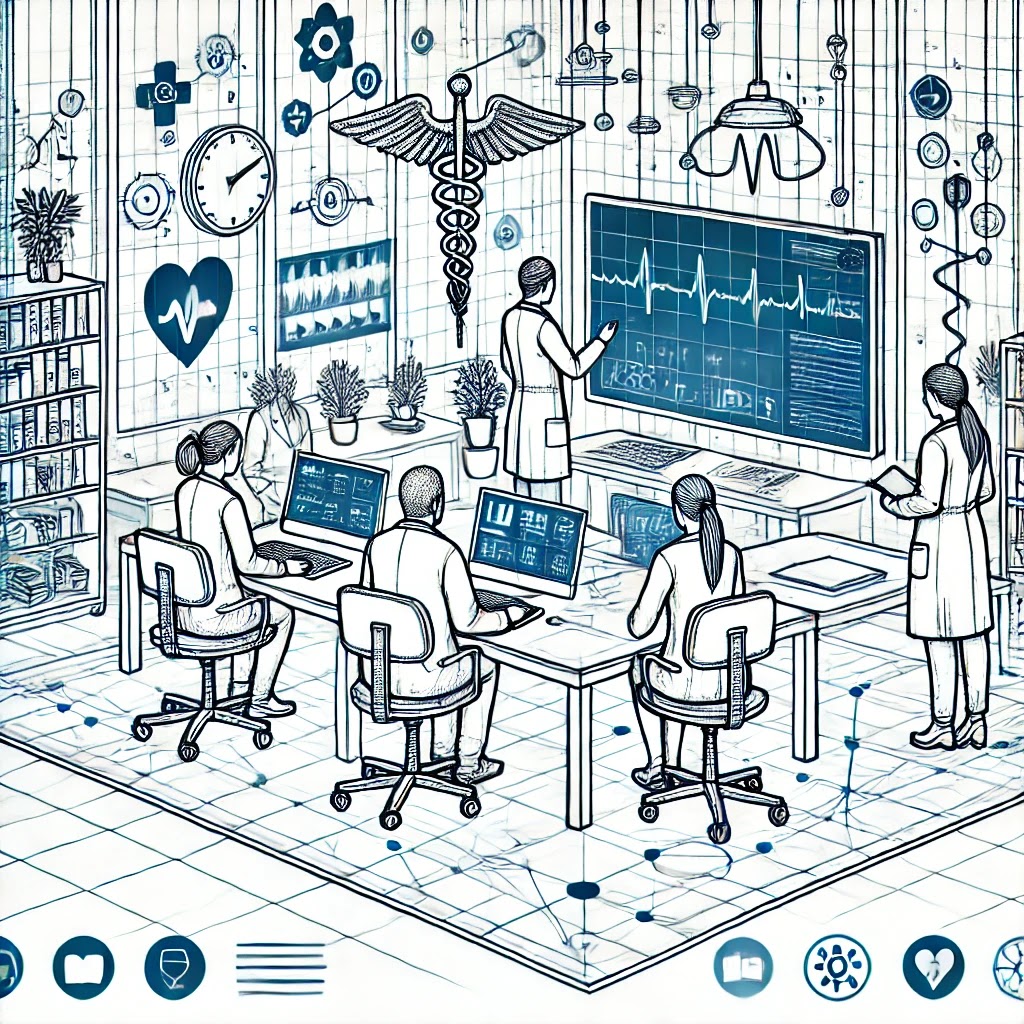
Invest in developing internal capabilities and forming strategic partnerships. For example, a healthcare organization could partner with a tech university to train their staff on the latest healthcare IT systems. This enhances the organization’s ability to innovate and implement new technologies effectively.

7. Technology Decoupling

Design technology architectures that minimize dependencies on specific vendors or technologies. For instance, a hospital could adopt a cloud-based solution that works with multiple providers, rather than relying on a single vendor. This approach enhances flexibility, reduces risk, and allows the organization to pivot more easily when necessary.

By adhering to these best practices and incorporating simple, relatable examples, healthcare and hospital administrators can navigate the complexities of IT transformation more effectively, ensuring they reap maximum benefits while minimizing potential pitfalls.


Sunday, May 9, 2021

Benefits of signing up with NDHM for a Doctor

The National Digital Health Mission (NDHM) has been busy signing up doctors into the Digi-Doctor portal in 6 union territories and is being met with a mixed response. The Digi-Doctor Portal will act as a registry for the doctors and provide services to them and their patients. The services will be provided on the backbone of digital data portability initially related to patient demographic information and clinical data but later to expand to claims, prescriptions, and more. 


While voluntary, the government is urging doctors to sign-up. Before we do list the benefits of the NDHM framework for doctors it would be good to list the reasons the doctors may not want to sign-up as per a few snippets floating online. 
Three stand-out reasons put forth are:


  • Doctors in general, will not be comfortable sharing their treatments and protocols with others, either for reasons of knowledge protection but more importantly due to opening themselves to malpractice suits.


  • Some doctors who indulge in the same may feel their referral system under duress as NDHM ensures Diagnostic reporting is done a minimum number of times due to data being shared easily under consent.


  • Lastly, there is some talk of having a standardized price list (already attempted under the Clinical Establishment Act) having to be shared as part of the NDHM sign-up, which may affect what the doctors charge for their services. While this standardization attempt is still speculation in terms of how it will be attempted or what it entails, this particular point will affect all doctors and hospitals irrespective of them being signed up or not and hence becomes moot.


Now to another important factor. All good doctors believe in the Hippocratic oath. It is seen so vividly in their fight against the COVID-19 waves, going out of their way to help their patients, sometimes at the cost of their own lives. Assuming that NDHM is securely and constructively implemented as envisioned, their belief in their oath should be enough of a reason to sign-up. Because simply put, having clear historical medical data of a patient and access to the latest reports helps them and the next doctor (when they contribute) make better decisions and hence helps their patient. That should be enough. 


But if it's not enough, here are a set of clear benefits for the doctors. Note: Many of these benefits are dependent on the doctors signing up, providing growth via a feedback loop for an even bigger benefit as the network size increases.


Some of the Administrative benefits are:


  • License Renewal: What is promised a simplified license registration, license renewal, and NOC (No Objection Certificate) issuance when moving from one state to another now that there will be a single national registry as opposed to multiple councils and requirements they come with. With the process now online and digital with Digi-Doctor being integrated with various council systems, the pain many doctors feel today in renewing their license will be greatly reduced.
  • A barrier for quacks: The registration process and then subsequent listing in the authorized registry will weed out the quacks that cause harm not only to patients but also to the reputation of doctors in general. These quacks also cause a decrease in revenue, as patients flock to these places which offer cheaper services. But only if doctors do register in numbers, can the registry be effective in weeding them out.
  • CME Credit tracking: A new system will also be introduced to track CME (Continued medical education) credits effectively online to ensure Doctors are aware of where they stand and do not need to jump through hoops to get their credits counted.
  • Faster Insurance approvals: Getting Insurance for the clinic or hospital owned by the doctor or the doctor’s malpractice indemnity will become much easier and faster once a doctor is verified in the authenticated registry. 


The Patient and Work-related benefits are:


  • Access to Patient History: The main benefit of this whole exercise. Access to an accurate and complete history of the patient. As more doctors and organizations sign-up, a more complete picture of a patient’s medical history will form up. Access to this history will ensure better care for the patient through better decision making, lesser errors (e.g. medication adverse events) than what occurs today due to partial knowledge, and quicker response times due to having data readily available. Providing better continuity of care is a key benefit each doctor must consider.
  • Tele-Consultations: Accessibility and authorizations to conduct teleconsultations plan to be brought under the ambit of NDHM. NDHM registered Doctors will be showcased on various government portals and registries as providers of teleconsultations. 
  • Access to Global Standards: As a part of the digital framework Doctors will get access to various standards and protocols along with disease and drug registries.
  • Access to Government Programs and Studies: Verified doctors will be considered for or apply for various government grants or be part of government health programs, research studies, etc. 


The Business-related benefits are:


  • Online Presence: Greater discoverability of verified doctor profiles with their professional work history/journey instilling higher trust amongst patients on a national platform. They can share this profile link on social media or on other sites to increase their patient flow. Doctors will also be given recognition on the portal by the NHA based on various parameters, including the number of medical records contributed increasing their profile further.
  • Access to Additional services: The NHA (National health authority) is planning to roll out additional services or allow 3rd party secure vendors to roll out services for doctors registered on the Digi-Doctor platform. Almost like a private marketplace for Doctors. 
  • Storage of records: Using the Digi-doctor platform Doctor may get access to secured digital storage which can be used to store digital copies of their licenses, degree, and other critical credentials. Digitally verified versions of these documents will be considered legal to share.
  • Patient insurance claims: The flow of payments between Insurance ←→ Hospital ←→ Doctor will speed up considerably, once we experience quicker claim turnaround times when the e-claim process is in place. This will reduce cash flow problems which several doctors do face from time to time due to delays in claim processing. 


There is apprehension amongst the Doctor community as there is with any Government registration process on whether it will infringe on their rights or bring in regulation that is detrimental to their wellbeing or livelihoods. 


The NHA for its part has started outreach programs at least in union territories so far to allay these fears. Their framework and plans so far speak of the good intentions of the ministry of health and family welfare (MOHFW). 


The question remains, will all these benefits outweigh the few niggling doubts in the minds of our current day superheroes.


References:


  1. https://ndhm.gov.in/documents/ndhm_strategy_overview
  2. https://tmc.gov.in/ncg/images/NDHM_presentation_for_NCG.pdf
  3. https://www.medianama.com/wp-content/uploads/2021/04/draft_ndhm_implementation_strategy.pdf
  4. https://ndhm.gov.in/home/digidoctor_faq

This article is authored by Aditya Patkar, CEO at Plus91

Monday, April 19, 2021

Why is India Facing a 2nd Wave of the Corona Virus

Till a few months back, we both were in awe of how our country had achieved remarkable control over the spread of Covid-19, across the nation. While a majority of the world was battling a 2nd wave of the virus, Indians had shown remarkable restraint and followed protocols for months on end. Something I have never experienced in our great country in my lifetime. This resulting in the divine union of central government directives with state government policy-making and bureaucratic action and departmental rule-making and the public following the rules, as well people helping the authorities enforce the rules by others.


Wow! This utopian behavior, was instrumental in India achieving among the best metrics in the world, in terms of how the fight with Covid is being measured. i.e. No of cases, No of active cases, The recovery rate, etc.

And then we as a country seem to have performed the hara-kiri that our cricket teams of the '80s and 90's were well known for. Before we had won the match, we started celebrating the victory, and seem to have lost the game. We didn't wait till Covid was completely under control. We started dismantling the specially created Covid Centers. We took our families to the malls and did not care about spraying sanitizers, before and after each interaction with something from outside our controlled environment. We started unmasking at will within our buildings and even at the Kirana stores. We started flying and driving around the country without masks and frolicking on the beaches of Goa. Our house parties were back on, and we destroyed the controlled zone that all India had worked so hard to become over a whole year. All, in less than a couple of months. And so it's back, worse than ever before, crippling our economy, our spirit, and making us feel bleak about the future. Except for this time, it doesn't look like everyone wants to tackle it together anymore.

The center and the states don't seem to get along. The media is pushing up the pitch and the amplitude of the hyperbole. Strangely, vaccines seem to be running out. People are still not masking up. Many are demonstrating utter and complete stupidity with regards to bending the rules. Construction sites are working in full sway as if there is no covid in this world. Watchmen in buildings aren't sure if they should let delivery in or collect them at the gate, so they do nothing. And the poor Kirana-wala is feeling weird about asking the people coming to his shop to mask up again. My neighboring Kirana-wala told me he is not done arguing with customers who are say "khaasi pehle nahin hui kya" (Translates to "Haven't you had a cold before?") Sounds like March 2020 again!

We both decided to formally put down our reasons for what has brought us to this stage. Policymakers must not let this happen again

1. The single biggest factor for the wave having arrived is how we have behaved in the recent past. 

  • People became complacent as the virus numbers fell. There was less social distancing, less effective usage of masks, and much more intermingling. 
  • The government helped create this complacency by changing the message they were spreading across the nation. Earlier it "Lets fight Covid together" and then in early 2021 we started hearing "We have the best recovery numbers, which within a short period started sounding like We have beaten Covid", and many Indians started hearing this as "We are invincible"
  • Even once the cases started to rise, people did not take it seriously as they believed the virus was already conquered given the vaccine roll-out happening in the background.
  • Teenagers and early twenties are a big factor in the spread this time. Many were unaffected by the last surge but the mutated strains affecting their age groups, coupled with the fact that these age groups in India at least are more likely to participate in social events and less likely to follow norms completely gave rise to a larger number of cases. 

2. Mutating Strains:

  • The nCov Virus can mutate quickly. This gives rise to multiple strains with differing characteristics. The strains doing the most damage are the ones where mutations allow for faster transmission of the virus. The second wave is mainly made up because of such slightly mutated strains which are harder to contain.
  • A new variant, called B.1.617, was initially detected in India with two mutations -- the E484Q and L452R. It was first reported late last year by a scientist in India and is the chief variant spreading in India which is highly contagious. It is also highly likely to evade the immunity provided by vaccines.
  • The Current strains affect a wider range of age groups. There is a larger number of cases, this time around, of children, teenagers, and pregnant mothers than in the previous wave. Hence a larger population is susceptible. 
  • The current strains though less damaging are highly contagious. The virus travels further and faster instead of causing more damage to the host. One of the reasons why Ebola does not travel far is its genetic makeup causes a very high and quick kill rate of the host, meaning if a limited number of hosts are contained it cannot travel very far as the host itself dies if not cured. This spread puts a lot of pressure on the public health infrastructure, crippling it beyond a point.
  • India was not sequencing enough SARS-COV2 genomes till late Feb 2021. Ref: https://science.thewire.in/the-sciences/india-sars-cov-2-genome-sequencing-roadblocks-resources-b117-n440k-variants/ and https://science.thewire.in/health/insacog-ccmb-igib-novel-coronavirus-variants-genome-sequencing-covid-19-surge/

3. The Vaccine rollout:

  • The ability to deliver a large number of vaccines in time and with proper delivery mechanisms is not yet perfect. There is scope for the production to be increased, and the delivery mechanisms improved. 
  • The fact that 2 doses are needed a few months apart for full efficacy gives the chance for the virus to take the person down in the long interim period. This interim period should have been defined as a period for vaccine takers to be extra careful.
  • The virus efficacy was never fully understood, and that the vaccine does not prevent the person infected from still being a carrier is still unknown to most.

4. Policy Changes 

  • Policy changes allowed weddings and parties to be carried out with an increase in the number of people allowed. It became impossible to control the social distancing protocols at these large events, and they eventually became super spreaders. The increase in Weddings, Parties, Election campaigns, etc went on unabated as restrictions were lifted just as the strains became harder to contain.
  • There is a distinct delay between policy change (Begin Again Initiative by the government) such as allowing opening of businesses or removing restrictions on gathering and movement of people to when these translate into numbers in COVID-19 analytics. An increase in the number of COVID-19 cases or admissions or even deaths is not seen immediately within the week or even 2 weeks but much later. The delay is much larger as the spread initially is limited to smaller circles but due to spreader events and clusters forming suddenly rise exponentially. So policy changes in the November-December period showed up as a sudden surge from February onwards, as policy change led to behavior change was fed back to appear in the population-level data.


This article is jointly authored by Aditya Patkar and Nrip Nihalani


Tuesday, April 6, 2021

In conversation with Aditya Patkar and Nrip Nihalani - Business Evangelist of India - Feature on Forbes India and B1TV

Healthcare is currently one of the most dynamic sectors witnessing rapid changes. 

In this feature  Nrip Nihalani and Aditya Patkar talk with Broadcast1 

  • about Plus91's journey over the past decade, 
  • about changing healthcare and being an integral part of the rise of digital healthcare 
  • and the crucial role Plus91 plays in the future of digital health. 

Includes our work on helping Healthcare organizations adopt digital tools, Predicting Epidemics, Creating and open culture and moving healthcare forward. Do Watch!


Here is a link to the feature - Business Evangelists of India

Sunday, July 1, 2012

Emails for Improved Doctor Patient Communication

E- Mails are a convenient medium for communicating in today's times. Slowly they have started being adopted in healthcare and as research shows, the percentage of physicians using emails to communicate with patients has increased gradually over the past 5 years.

A lot of communication between a doctor and patient is best done physically.
Doctors need to see patients in person to accurately gauge the patient's health and determine if a plan of care is being followed or whether changes in care are needed.

But …there are plenty of interactions that don't require face-to-face communication and that can be more effective via email.

The presentation below contains information for clinics, hospitals and doctors to help them use Emails effectively with patients to improve Patient Engagement, Patient Satisfaction and Quality of Care


Sunday, June 17, 2012

Basic Computer Security for Doctors

Computer Viruses are evil. Period... They are the biggest reason why those new to technology don't use more of it. Viruses cause computers to behave sluggishly, randomly and sometimes illegally.

Here we have put together a Simple Presentation about Computer Security and Anti Viruses keeping in mind health professionals. In this presentation we go through Common PC Security Issues and explain what causes them.

We then look at what can one do to Protect their computers. This includes Definitions, Educational Content, Precautionary Steps, Options of Complete Solutions and a Simple tutorial on How to use a popular Free Antivirus.

Please help us with your feedback in the comments section below or email us directly.


Sunday, June 3, 2012

Healthcare Get Started With Twitter

Twitter is a Social Network where users send and read short messages of upto 140 characters.

Twitter is a Cross between Text messaging, Blogging and Instant Messaging and is called the ‘SMS’ of the Internet.

This is a Simple starter guide for Healthcare Professionals to get started with Twitter 

Tuesday, October 4, 2011

Online Health Communities : Using IT to facilitate Information Therapy

For years, patients have liked to work in groups, to support each other, to help themselves cope with illnesses which their near and dear ones don’t understand, to seek advice from others who have similar ailments. 

Bringing people together in collaborative dialogue to explore social conditions that are the major influences of health and illness generates deeper collective awareness and community-driven action.

Since Individuals don’t see their lives partitioned into an online and offline world, Online communities should be given as much value as offline ones. A variety of Online Communities must come up for connecting patients quickly and privately with others who share similar health experiences. A fantastic example of one such community is Patients Like Me

Technology today exists not only in the form of created online communities but also online community frameworks; These allow just about anyone with an idea for a group or community to set up an online network, full with video and audio chats, whiteboarding, discussion forums and groups and all the other good stuff.

This helps create an integrated digital ecosystem which simultaneously addresses both individual and social dimensions of health. In effect this
-- Allows Patients to engage with each other

-- Allows Providers to engage with this medium

This is the 5th Article in a series of Articles on Using IT to facilitate Information Therapy by Nrip Nihalani and Aditya Patkar 


Wednesday, August 10, 2011

Five Free Simple Google Tools For Doctors

Digital technology has done a lot to change healthcare over the past 20 years. And Google is the biggest influence on the web over the past 14 years of the internet. Their “Do No Evil” ‘philosophy’ has given us a whole stable of free and easy to use tools which can make all work easier and better.


Google's premier patient offering, Google Health was quietly buried. There have been no comparable Google tools for doctors. Their Raison d'ĂȘtre, the Google search has long been a much maligned tool for medical professionals. But there is lots more a doctor can do with free Google tools. Let’s take a look at *Five Free Simple Google Tools For Doctors.*


1) Gmail

This is the most useful service ever by Google, barring Google Search. And you can have more of it! You can use Gmail to create 2 (or more) free accounts. So you can create one personal and another public email address for your medical practice. Eg: one can be *dr.nirmal@gmail.com* and another
*neuromumbai911@gmail.com*. By going to settings, you can then set to import your other email account into any one primary gmail account.

You can also enable ‘*multiple inboxes*’ via Labs subtab in mail settings, allowing you to receive neatly segmented mails. Check this video

You can reply by your choice of account, enabling you to keep your personal and professional emails separated by different accounts, yet accessible and answerable from one single account. Here’s a detailed screenshot enhanced post about this feature on MakeTech easier. Read this Gmail tutorial for lots more info on these features.

Websites for Doctors by Plus91 lets you leverage on Google’s email offering creating social media profiles for you and letting you use your own personalized email ids.

Eg. drrajan@ivfinindia.in (www.ivfinindia.in)


2) Google Alerts

If there are certain terms you want to follow on Google and receive any new mentions directly to your email inbox, create a Google Alert. Fill in the term you need to follow, like ‘*neurology India news’* or ‘*dr. nirmal surya’* and set the frequency/type of alerts required. *Stay updated via email.*

You can also directly add such feeds to your website thus making it an information resource for others to see for a particular topic. E.g. PIPCDocs Website at the bottom left corner


3) Google Maps

Maps and *Places* allow you to mark your professional locations and timings on a map. Link this marked map within all your emails. Henceforth *all patients you email will see how to reach you easily via a map*, with additional info about consultation hours that you might want to share.

Every Website made by Plus91 comes with its own embedded Google maps to allow patients to easily track your location. E.g. Dr Karnik’s Clinics under the Location Tab


4) Google Scholar


You don’t need to always go to Pubmed for all your medical searches. Head to Google Scholar and do any *advanced search* (author, type, publication year and lots more filters). You will get More Results. You will search more medical databases. Try it
.
Plus91 has numerous initiatives to help promote your website using information tools like slideshare and Collaborative Online Journals like Indian Health Journal which will get you listed sooner than later.


5) Youtube Channel

Online videos are the most important medical info resource. But you don’t need to create videos to run a medical educational channel for your patients. Just create a channel by free login and start marking as *favourite the best medical education videos* you think might help your patients. Set channel settings to demonstrate your video favourites. You can also create multiple playlists on multiple topics and share them separately. Thus, you have a full blown video channel. Zero cost!

Now create your own You Tube channel with us at Websites for Doctors and upload videos of surgeries, patient testimonials and also a tour of your clinic.

We are planning another post on 5 Advanced and Free Google tools For Medical Practitioners. If you want to read that soon, *Share this*. If you need help with any of the above tools, comment below.

Article by: Dr Neelesh Bhandari and Co-edited by Aditya Patkar