Showing posts with label digital health. Show all posts

Sunday, October 13, 2024

Exploring the Evolving Landscape of the Healthcare Industry: What It Means for Future Job Roles

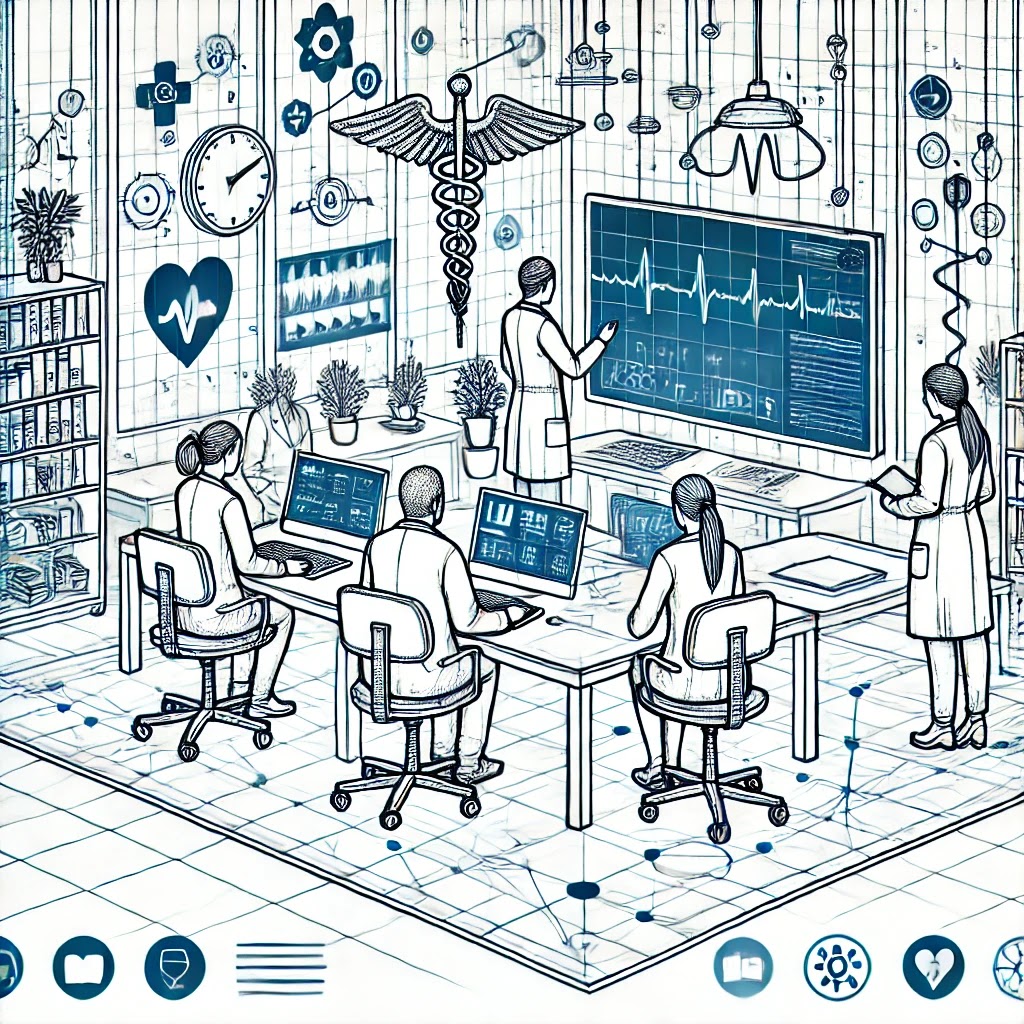
As we stand on the cusp of a new era in healthcare, the landscape is shifting beneath our feet, urging us to prepare for a future that blends technology and care in revolutionary ways. At Plus91, we're not just keeping pace with the future of healthcare—we're leading it. Let's explore the emerging trends, necessary skills, and strategies that healthcare organizations can adopt to stay ahead of the curve in this rapidly changing environment.

The Rise of Telehealth and Virtual Care

Telehealth has surged as a primary mode of delivering care. Our streamlined telehealth solutions have eliminated bottlenecks in patient care, transforming practices across the globe. Healthcare providers can now connect with patients virtually, offering convenience without compromising quality.

Integrating AI and Machine Learning

AI and machine learning are no longer distant possibilities; they're part of our daily operations. Our AI-Driven EMR offers robust data security and seamless interoperability, ensuring precision in patient care. These technologies are reshaping job roles, demanding new skillsets focused on analytics and data-driven decision-making.

Personalized Medicine

With advancements in genomics and biotechnology, personalized medicine is gaining traction. Our solutions enable providers to tailor treatments based on individual genetic profiles, enhancing patient outcomes. This shift requires healthcare professionals to be adept in interpreting complex genetic data.

Necessary Skills for the Future

Digital Literacy and Technological Acumen

The future demands healthcare professionals who are digitally literate and technologically savvy. Our AI-driven tools enhance operational efficiency, and familiarity with these technologies is becoming indispensable. Training programs and continuous learning must be prioritized to equip teams with the latest knowledge.

Data Analysis and Interpretation

With a deluge of data available, the ability to analyze and interpret information has become crucial. Plus91’s systems are designed to support data-driven insights, helping professionals make informed decisions. This skill not only optimizes patient care but also streamlines healthcare operations.

Interpersonal and Communication Skills

As technology takes center stage, the human touch remains irreplaceable. Trust Plus91 to transform your healthcare operations with precision and reliability, while we emphasize the importance of empathetic patient interactions. Combining soft skills with technological expertise will be key to future roles.

Strategies for Healthcare Organizations

Investing in Staff Training and Development

Continuous professional development is non-negotiable. Organizations must invest in training programs to upskill their workforce. Partner with Plus91 for secure, scalable healthcare solutions you can trust, ensuring your team is well-prepared to harness emerging technologies.

Fostering a Culture of Innovation

Innovation must be at the heart of every organization. Encourage creativity and experimentation within your teams. Experience the dynamic solutions that keep your practice ahead of the curve by adopting Plus91’s cutting-edge tools.

Building Adaptable and Resilient Systems

In a landscape marked by rapid change, resilience is essential. Utilize our HL7 integrations for seamless data exchange across systems, creating adaptable infrastructures that can withstand future challenges.

Leading the Charge in Healthcare Evolution

At Plus91, we are committed to being your dependable partner in navigating this evolving landscape. We invite you to trust us with transforming your practice using our innovative solutions. How can AI reshape your practice’s future? Join us in pioneering discussions on AI in healthcare technology at prominent forums.

Let’s embark on this journey together. 

Elevate your care with Plus91’s AI-driven patient platforms, and transform your patient care today

Enhance your staff with Digital Literacy and Health AI training programs from Plus91

Secure your networks and medical software with Plus91's cyber security plans

Together, we will drive the healthcare industry forward, ensuring that our future job roles are as dynamic and innovative as the technologies we embrace.

Friday, June 28, 2024

Best Practices for Successful IT Transformation in Hospitals

The healthcare industry, particularly hospitals, managed care groups and clinics catering to chronic illnesses are undergoing a profound transformation, thanks to the advancements in Technology including Automation Technologies and Artificial Intelligence. 
 
These technologies are not just enhancing existing treatment protocols and care processes; they're redefining the way hospitals and doctors operate, treat patients,speed up recovery and prevent health risks.

Embarking on an IT transformation journey is essential for modern healthcare institutions seeking to stay competitive and agile in a rapidly evolving digital landscape. To mitigate risks and maximize the benefits, consider these best practices, with simple examples to illustrate each point:

1. Seek Incremental Progress

Breaking down large transformation projects into smaller, manageable phases can significantly reduce complexity. For example, instead of overhauling an entire electronic health record (EHR) system at once, start by digitizing patient intake forms. This allows for early wins, creates organizational momentum, and enables continuous assessment and adjustment.

2. Ensure Strong Management

Robust program management frameworks are crucial for overseeing and guiding the transformation process. 

Imagine a hospital managing a facility-wide IT upgrade. By using a strong program management framework, they can ensure each department's needs are met, resources are efficiently allocated, and timelines are adhered to, avoiding project delays and budget overruns.

3. Redesign from scratch

Adopting a design which allows for a complete redesign of products and processes. For example, a hospital could design a new patient management system from scratch, rather than trying to patch and adapt their outdated database. This method helps organizations move away from legacy systems and create more efficient and modern solutions.

4. Create a Culture of Innovation

Fostering a culture of innovation within the organization is vital. For instance, a healthcare system could set up an innovation lab where employees can experiment with new technologies like telemedicine platforms or AI-driven diagnostic tools. This encourages continuous adaptation and integration of new technological advances.

5. Aligned Incentives for all stakeholders

Ensure that all stakeholders, including medical staff, IT departments, vendors, and integrators, have aligned incentives. A practical example would be aligning the goals of a software vendor with those of the hospital's IT department by structuring contracts based on performance and patient satisfaction metrics, ensuring both parties work towards common objectives.

6. Build internal capabilities

Invest in developing internal capabilities and forming strategic partnerships. For example, a healthcare organization could partner with a tech university to train their staff on the latest healthcare IT systems. This enhances the organization’s ability to innovate and implement new technologies effectively.

7. Technology Decoupling

Design technology architectures that minimize dependencies on specific vendors or technologies. For instance, a hospital could adopt a cloud-based solution that works with multiple providers, rather than relying on a single vendor. This approach enhances flexibility, reduces risk, and allows the organization to pivot more easily when necessary.

By adhering to these best practices and incorporating simple, relatable examples, healthcare and hospital administrators can navigate the complexities of IT transformation more effectively, ensuring they reap maximum benefits while minimizing potential pitfalls.


Sunday, May 9, 2021

Benefits of signing up with NDHM for a Doctor

The National Digital Health Mission (NDHM) has been busy signing up doctors into the Digi-Doctor portal in 6 union territories and is being met with a mixed response. The Digi-Doctor Portal will act as a registry for the doctors and provide services to them and their patients. The services will be provided on the backbone of digital data portability initially related to patient demographic information and clinical data but later to expand to claims, prescriptions, and more. 


While voluntary, the government is urging doctors to sign-up. Before we do list the benefits of the NDHM framework for doctors it would be good to list the reasons the doctors may not want to sign-up as per a few snippets floating online. 
Three stand-out reasons put forth are:


  • Doctors in general, will not be comfortable sharing their treatments and protocols with others, either for reasons of knowledge protection but more importantly due to opening themselves to malpractice suits.


  • Some doctors who indulge in the same may feel their referral system under duress as NDHM ensures Diagnostic reporting is done a minimum number of times due to data being shared easily under consent.


  • Lastly, there is some talk of having a standardized price list (already attempted under the Clinical Establishment Act) having to be shared as part of the NDHM sign-up, which may affect what the doctors charge for their services. While this standardization attempt is still speculation in terms of how it will be attempted or what it entails, this particular point will affect all doctors and hospitals irrespective of them being signed up or not and hence becomes moot.


Now to another important factor. All good doctors believe in the Hippocratic oath. It is seen so vividly in their fight against the COVID-19 waves, going out of their way to help their patients, sometimes at the cost of their own lives. Assuming that NDHM is securely and constructively implemented as envisioned, their belief in their oath should be enough of a reason to sign-up. Because simply put, having clear historical medical data of a patient and access to the latest reports helps them and the next doctor (when they contribute) make better decisions and hence helps their patient. That should be enough. 


But if it's not enough, here are a set of clear benefits for the doctors. Note: Many of these benefits are dependent on the doctors signing up, providing growth via a feedback loop for an even bigger benefit as the network size increases.


Some of the Administrative benefits are:


  • License Renewal: What is promised a simplified license registration, license renewal, and NOC (No Objection Certificate) issuance when moving from one state to another now that there will be a single national registry as opposed to multiple councils and requirements they come with. With the process now online and digital with Digi-Doctor being integrated with various council systems, the pain many doctors feel today in renewing their license will be greatly reduced.
  • A barrier for quacks: The registration process and then subsequent listing in the authorized registry will weed out the quacks that cause harm not only to patients but also to the reputation of doctors in general. These quacks also cause a decrease in revenue, as patients flock to these places which offer cheaper services. But only if doctors do register in numbers, can the registry be effective in weeding them out.
  • CME Credit tracking: A new system will also be introduced to track CME (Continued medical education) credits effectively online to ensure Doctors are aware of where they stand and do not need to jump through hoops to get their credits counted.
  • Faster Insurance approvals: Getting Insurance for the clinic or hospital owned by the doctor or the doctor’s malpractice indemnity will become much easier and faster once a doctor is verified in the authenticated registry. 


The Patient and Work-related benefits are:


  • Access to Patient History: The main benefit of this whole exercise. Access to an accurate and complete history of the patient. As more doctors and organizations sign-up, a more complete picture of a patient’s medical history will form up. Access to this history will ensure better care for the patient through better decision making, lesser errors (e.g. medication adverse events) than what occurs today due to partial knowledge, and quicker response times due to having data readily available. Providing better continuity of care is a key benefit each doctor must consider.
  • Tele-Consultations: Accessibility and authorizations to conduct teleconsultations plan to be brought under the ambit of NDHM. NDHM registered Doctors will be showcased on various government portals and registries as providers of teleconsultations. 
  • Access to Global Standards: As a part of the digital framework Doctors will get access to various standards and protocols along with disease and drug registries.
  • Access to Government Programs and Studies: Verified doctors will be considered for or apply for various government grants or be part of government health programs, research studies, etc. 


The Business-related benefits are:


  • Online Presence: Greater discoverability of verified doctor profiles with their professional work history/journey instilling higher trust amongst patients on a national platform. They can share this profile link on social media or on other sites to increase their patient flow. Doctors will also be given recognition on the portal by the NHA based on various parameters, including the number of medical records contributed increasing their profile further.
  • Access to Additional services: The NHA (National health authority) is planning to roll out additional services or allow 3rd party secure vendors to roll out services for doctors registered on the Digi-Doctor platform. Almost like a private marketplace for Doctors. 
  • Storage of records: Using the Digi-doctor platform Doctor may get access to secured digital storage which can be used to store digital copies of their licenses, degree, and other critical credentials. Digitally verified versions of these documents will be considered legal to share.
  • Patient insurance claims: The flow of payments between Insurance ←→ Hospital ←→ Doctor will speed up considerably, once we experience quicker claim turnaround times when the e-claim process is in place. This will reduce cash flow problems which several doctors do face from time to time due to delays in claim processing. 


There is apprehension amongst the Doctor community as there is with any Government registration process on whether it will infringe on their rights or bring in regulation that is detrimental to their wellbeing or livelihoods. 


The NHA for its part has started outreach programs at least in union territories so far to allay these fears. Their framework and plans so far speak of the good intentions of the ministry of health and family welfare (MOHFW). 


The question remains, will all these benefits outweigh the few niggling doubts in the minds of our current day superheroes.


References:


  1. https://ndhm.gov.in/documents/ndhm_strategy_overview
  2. https://tmc.gov.in/ncg/images/NDHM_presentation_for_NCG.pdf
  3. https://www.medianama.com/wp-content/uploads/2021/04/draft_ndhm_implementation_strategy.pdf
  4. https://ndhm.gov.in/home/digidoctor_faq

This article is authored by Aditya Patkar, CEO at Plus91

Monday, May 3, 2021

An overview of NDHM's Technology

National Health Authority (NHA) has been working on a new-age ecosystem for healthcare data for India, one which allows seamless availability and interoperability of Personal Health Records to authorized people, they started designing the new ecosystem network such that data is available always to the patient all the time. Further, patients can choose to share their data with their health care providers securely.

Since the implementation was envisioned to be in a mission mode, the initiative was named, and is currently referred to as the National Digital Health Mission (NDHM). 

NDHM Architecture

NDHM is employing a federated architecture for its ecosystem. That means that management and data access occurs in a federated manner where different entities or systems will manage the health data.
There is no central data storage controlling and storing data.

Using the Federated Health Records Framework (FHR), patients can access and view their health records, and provide consent to any HIPs and HIUs to access their data.

To ensure smooth consented data sharing and time-bound data access, it is necessary to make the data traceable and auditable. Therefore the FHR Framework architecture leverages MeitY's Data Empowerment and Protection Architecture (DEPA) electronic consent framework, which is already being used in the financial sector.


Here are some interesting technical features of the NDHM ecosystem

FHIR for all Medical Data

One of the prevalent problems in the healthcare software landscape is that software providers have their own proprietary data structures and way of dealing with medical data. Despite having various standards available in the industry, very few providers use them correctly. This affects interoperability between systems. That is why it was required that all the systems on the ecosystem use the same standards for medical data so that data is interoperable. This is why the FHIR(Fast Healthcare Interoperability Resources) Specification was chosen as the data exchange format.

Asynchronous APIs


All the APIs(Application Programming Interfaces) of NDHM are asynchronous APIs. That means that you do not get the response of your requests synchronously but the response is sent back to your endpoints as a callback once your request is processed. This is a pretty standard technique in large distributed systems, and its use is expected and welcomed.  As things start moving forwards, more providers will join and the number of transactions will grow exponentially. This model allows them to scale the network easily as we move forward.

It is also important to know that plenty of interactions happen between Health Information providers (HIPs) and each HIP software may handle requests differently. So making the API calls asynchronous, helps manage the variable serving capabilities of different HIP software graciously.

Patient Privacy & Security Features of NDHM


Privacy of the Patient Data is crucial and a lot of people are not comfortable with sharing their personal health data on central servers, especially sharing them with the government without their consent. The model that was adapted for this handles this concern very well. 

Let's see how this is handled to ensure patient privacy is ensured,  and it's the patient who owns the data.

HIPs can only create data if authorized by the Patient:

HIPs cannot create any data against a Health ID without first being authorized by the Patient. HIP obtains an Auth Code from NDHM Gateway by one of the following authorization methods:

  • Demographics Verification - Patient Demographics data supplied by HIP matches the Demographics data registered with the Health ID
  • Mobile OTP - Patient shares OTP sent to registered mobile number with the given health ID
  • Aadhar OTP - Patients shares OTP sent to the mobile number registered to Aadhar No associated with the given health ID
  • QR Code Share - Patient has the option to share their health ID by scanning the QR code available to the registration desk and the given HIP receives Patient Information and the Auth Code.
This ensures that no health data against a patient Health ID is being created without the patient’s approval.

An HIU(Health Information User) can only get past health records of other HIPs if consented by Patient

Other HIU's do not get a Patient’s past health records generated by other HIPs without the patient’s consent. If an HIU wishes to receive the past records, HIU needs to generate a Consent request with the following information:
  • Types of Health Data (OPConsultation, Prescriptions, Diagnostics Records, Discharge Summary & Immunization)
  • The purpose for Requesting Data
  • The date range of the data required
  • Consent Expiry - On consent expiry, this health data get destroyed from HIU’s system
As soon as this request is generated, the patient is notified about this consent request and he can review the request in the PHR app. The patient will be able to see all the data requested by HIU as mentioned above. Not only can the patient review the data but the patient also has the option to modify the request data( e.g. change consent expiry or type of data he/she wish to share or even change the date range of health records requested). This data is only shared with the HIU if the patient approves the consent request. If he denies the request, HIU does not receive this data.

Not only can patients review these things, but the patient can also decide to prematurely revoke access to any HIU‘s approved requests. If a patient decides to revoke access, the corresponding data will get destroyed from HIU’s system.

This mechanism ensures that patients always have control over their data.

Peer to Peer Data Transfer Between HIP & HIU

As mentioned earlier, a lot of patients are uncomfortable about their private health records being available to and accessed by the government. To avoid this altogether, NDHM never handles the data themselves. The NDHM Gateway only coordinates the connections between HIP and HIU. The actual data transfers happen between HIP & HIU directly and it is effected using a peer-to-peer connection. It does not pass through NDHM, and so there is no way NDHM can access the data.

Data exchange between the HIP & the HIU also happens using encrypted medical records above the standard TLS connection. This adds an additional layer of encryption for medical data.

The ECDH (Elliptic-curve Diffie–Hellman) key agreement protocol is used for this. The HIP & the HIU generate their own pair of public-private keys using curve25519 elliptic curve. This curve provides 128 bits of security for the data being encrypted.

The HIP will use its own private key and the HIU’s public key to compute a session key and encrypt the content using an AES GCM cipher. The HIU can use their private key and the HIP’s public key and compute the session key to decrypt the data. So even if the encrypted data is leaked, no one except these two parties can encrypt/decrypt the data.


Final Thoughts

The NDHM is a wonderful initiative by the government to streamline the healthcare landscape in India today. At this time, all the health data is available as silos within different solutions and systems. It is very difficult, if not impossible, to make the data interoperable between systems. Consequently, it is difficult for patients to access the data across these silos and manage it properly within a system of theirs choice. This project has the ability to revolutionize the industry. This could be the UPI of Healthcare.

It is one thing to have a concept and another thing to implement and execute it. So far NDHM seems to be going in the right direction.  And there is hope that it will continue to do so. 
Technology is being given equal importance to gain the trust of all players involved in this industry.

Privacy and Security have been a prime priority in the project as you can see from the above article, this is an oft-ignored aspect in old projects. Hope it continues to stay this way.

References


https://sandbox.ndhm.gov.in/docs/architecture

https://sandbox.ndhm.gov.in/docs/data_encrypt_decrypt


This blog post has been co-authored by Kishan Gor , Aditya Patkar and Nrip Nihalani